I
want to move a teacher from a reading specialist position back into the
classroom. My district has recently changed the responsibilities of
the reading specialist from a pull-out model to a school level resource
model. Under the new model the teacher is expected to coach other
teachers to improve their skills in literacy instruction - by modeling
and leading inservices - rather than meet with students in a resource
classroom. While she was good reading teacher under the old system, her
skills under the new system are subpar.
I
recently met with her and presented her with a letter outlining her
deficiencies and the reasons for the move. She acknowledged that she
has not been successful this year but asked if we could complete the
move without the letter. So my question is this, can I retract the
letter and still move her back to the classroom?
Short answer, I don’t think so.
By
documenting her performance and your concerns in a letter you have
formalized your thoughts and given credence to your actions. You have
lessened the chance that the move was arbitrary or based on other
(protected ?) factors.
Let’s
say that you acquiesce to the teacher’s request and make the move
without supporting documentation. The teacher thanks you and you think
everything is fine. After all, she admitted to that her current
performance does not meet your standards. You sleep well at night.
Flash forward three months and you get a call from the Human Resources
Department letting you know that the teacher contacted the EEOC and
charged you with age discrimination. HR wants to see your documentation
relating to the reassignment of the teacher.
“Ummmm, well you see I had it but the we kind of made this agreement and well now I just but ….”
You turn into a blathering idiot simply because you were trying to be nice.
Documentation,
and hopefully for this case you had more than just the letter, can be
your best friend when it comes to defending yourself against employee
claims. Not only that, as the leader of the school it is your
responsibility to accurately evaluate your teachers and employees and
provide them with feedback related to their performance. That may mean
that you’ll be involved in many unpleasant and difficult conversations
but making sure your teachers are up to the standards of your school and
division is an #edleader’s chief responsibilities.
Showing posts with label edadmin. Show all posts
Showing posts with label edadmin. Show all posts
Friday, January 17, 2014

Friday, December 20, 2013
Principal as Instructional Coach - No Competition
It's the last day before winter break and, like you, I'm swamped. So today I'm rerunning a piece from 2012 about the important role principals play as instructional coach.
Enjoy your holiday!
SZ
---
Short post today.
Dag-gone work is getting in the way of my writing. So I'm writing this on my Lapdock while sitting at McDonalds after just having sucked down a $.99 McDouble - I think I'm addicted to that sandwich.
But I digress, and the office is expecting me back.
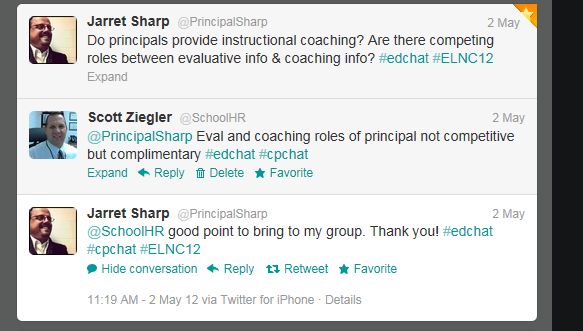
I ripped this conversation from Twitter earlier in the week (from @PrincipalSharp) and thought it would make a good post. The conversation had to do with principals as instructional coaches and whether their role as boss and evaluator interfered with that role.
Enjoy your holiday!
SZ
---
Short post today.
Dag-gone work is getting in the way of my writing. So I'm writing this on my Lapdock while sitting at McDonalds after just having sucked down a $.99 McDouble - I think I'm addicted to that sandwich.
But I digress, and the office is expecting me back.
I ripped this conversation from Twitter earlier in the week (from @PrincipalSharp) and thought it would make a good post. The conversation had to do with principals as instructional coaches and whether their role as boss and evaluator interfered with that role.

Monday, December 16, 2013
3 Ways to Handle Teachers Taking Extra Personal Days
 |
| So who's ready to teach 1st Period Tomorrow? |
Q: @SchoolHR: Any policies dealing with teachers taking extra personal days?
A: This can be a tough one to handle. Many teachers feel that leave is given to them to use, which I guess technically it is, so they use all of their allotted days plus some. There are, however, a couple of things you can do to curb the practice.
1) The nice approach - let the teacher know how it affects her students when she is out. Assuming she's using all of her sick leave, all of her personal days, and taking additional days that adds up to a lot of time out. Do the math for her. The conversation could go like this, "You missed a total of 18 days this year, that seems like a lot to me. Do you realize that you missed over 10% of the school year by being out so much? Think how you students could have benefited from your increased attendance." Then trust the teacher to act professionally see if attendance improves.
2) Next step would be to check your district's policies. Most of the districts I've worked for had a policy that read something like, "attendance patterns that hinder the normal operation of the school will be treated as a discipline issue." This allows you to note the attendance problem on the evaluation - low mark in professionalism and a comment like, "you have missed X days this year which is over the number allotted to you; in the future you will maintain regular attendance." You can also document the behavior through letters and written reprimands. If your district allows, require doctor's notes for each instance of sick leave.
3) Don't bend the rules. If the teacher is taking personal leave and is out of personal leave don't allow her to record sick leave in order to be paid. When you can effect someone's pay check you can usually get results. Record the hours over the allotted as leave without pay.
Finally, I have to ask who is approving the leave? Generally, personal reasons leave has to be approved by someone, a supervisor, an assistant principal, or the principal and it is okay for those with sign-off authority to say "no." The teacher will bitch and moan but if they're abusing the policy then it's up to those in charge to put a stop to it.
Good luck!
Recommended Reading:
iTunes Link:
Dealing With Difficult Teachers - Todd Whitaker
Wednesday, November 6, 2013
The Principal's 3 Most Important Tasks


Top 10 list?
Nope, 10 is too many.
From a purley HR perspective here are the top 3 job tasks for principals:
- Hire the right people,
- Honestly evaluate your people and help them improve,
- Get rid of the wrong people.
Thursday, November 8, 2012
50 Things Teachers Should Never Post

I've always recommended that teachers should separate their personal and school social media personas. However, if you chose not to heed this advice, here are the top 50 things you should never post on any SM page to which your students have access.
1. Pictures of yourself in a bathing suit.
2. Pictures of your significant other in a bathing suit.
3. Anything that starts with the word 'Party.'
4. Pictures of you holding a mixed drink.
5. Pictues of you holding a 40.
6. Pictures of you two fisting your drink.
7. Boyfriend drama.
9. Family drama.
10. Work drama.
11. Results of your pregnancy test.
12. Results of your wife's pregnancy test.
13. Results of you lab work.
15. Your weight loss.
16. Your weight gain.
17. Your Vegas trip.
18. Your Miami trip.
19. Stories about you in high school.
20. Stories about you in college.
21. Frat stories.
22. Sorority stories.
25. First date stories.
26. Last date stories.
27. New boyfriend stories.
28. New girlfriend stories.
 29. Old boyfriend stories.
30. Old girlfriend stories.
31. Your review of 50 Shades of Gray.
 Get your copy >>>>>>>>>
32. Your review of Showgirls.
33. Your blackjack strategy.
34. Your craps strategy.
35. Your Lottery numbers.
36. Your bank account balance.
37. Your marriage problems.
38. Your kid's problems.
39. Your love life.
40. Your lack of a love life.
41. Your wedding pictures.
42. Your divorce pictures.
43. Boxers or briefs.
44. Bikini or thong.
45. Your cycle.
46. Negative comments about students.
47. Negative comments about your neighborhood.
48. Negative comments about your principal.
49. Negative comments about your colleagues.
50. Your personal contact information.
Flickr photo credit - Urs Steiner - stoneysteiner (CC)
Wednesday, October 17, 2012
Do You Have The Guts To Stop The Grinding?
 |
| Empty Dance Floor |
 by county marquees
 Today, I'm sending out a cyber pat-on-the-back to Middleton (RI) High School Principal Gail Abromitis and her staff for having the guts to do the right thing in the face of 400 angry students.
According to the Providence Journal, Abromitis shut down the homecoming dance after students refused to adhere to a 'no grinding' dance policy. For those of you who have not seen a high school dance lately let me just tell you that they can be a torrid affair. Here's a rather mild 'how to grind' video I found on YouTube. Imagine a dance floor full of teenagers doing the same thing (only with more enthusiasm - if I can use that as a euphemism for nastier). Walking through a dance floor trying to separate individuals and groups (yes they do this as a group) from dancing like this always left me feeling a bit dirty and longing for the the 80s kickstep that was in vogue when I was dancing to Tears for Fears and The Alarm.
The school announced a ban on this type of dancing prior to the dance. When the students refused to comply, the principal stopped the music to remind students of the rule. She even enlisted the help of the senior class president to calm things down. Unfortunately, things turned from nasty to dangerous. The Journal reports that a mob mentality developed among the students who began spewing profanities at the principal. At this, Abromitis activated the emergency call system and sent students home.
Sometimes sitting at the big desk means making unpopular decisions. Kudos to Abromitis for doing the right thing.
Monday, October 8, 2012
Teacher Suspended Over Facebook Post

Gaston County (NC) High School English teacher Shanna Sigmon-Moore was suspended with pay for allegedly posting and commenting about student's work on Facebook. According to Education Week, Sigmon-Moore took photos of three students' papers, highlighted their spelling a grammatical errors and posted them to the site. When others commented on the papers she responded, "See what I go through everyday?"
I bet her principal had the same thought.
The post wasn't public but was posted to a select group of friends one of whom, I'm guessing, didn't like what she read and turned Sigmon-Moore in to the administration.
How many times do I have to say it?
Teachers need to be extremely careful about what they post online. This teacher not only violated the trust of her students and the community but may have violated FERPA laws as well. The division was correct in suspending her during the investigation (as of this writing there was no update on Sigmon-Moore's employment status).
If you find yourself involved in a similar situation there are several steps you can take to mitigate the impact on instruction and restore community trust -
- Document the questionable post by printing the entire page with footers enabled. In Explorer the footer will note the web address and the date printed. I also like to take a screen shot of the post and save it electronically.
- Ask the teacher to remove the post and explain why you are doing so ... "Mr. Teacher, this post violates student privacy and has eroded the trust your students and parents have in you; I am asking you to remove the post so that we can begin to restore that trust. Additionally, the post is in violation of division policy and while there is a possibility that this may effect your employment, removing the post could help to lessen those effects later."
- Seek permission from senior leadership to remove the teacher from the classroom during the investigation.
- Let the parents of the students know what is going on - better they find out from you then to read about it themselves on Facebook.
- Follow division policies for employment action. Depending on the severity of the offence termination may be appropriate - in this case, I would likely recommend a written reprimand or disciplinary probation depending on her past employment record. If student names were disclosed, which I don't think they were in this case, I would recommend termination.
You may also be thinking that a revision of division social media policies would be needed after an incident like this - however, as long as teachers understand that all division policies apply to online postings and behaviors you should be covered policy-wise.
Here are some resources to help your teachers along:
Photo Credit - (CC) ilovebutter (no real name given)
Tuesday, September 11, 2012
Are We Missing The Mark? 3 Ways to Get Beyond BYOD Fears
 |
| Is your thinking on BYOD as dated as the tech in this picture? |
Open house.
I wonder how many administrators have trouble attending open house as a parent. I know I do. It's hard to turn off the urge to evaluate and coach while listening to the teachers' presentations. Am I supposed to be scripting? Should I point out the typo on the class expectations sheet? Are you really going to enforce that policy?
I try to look at the big picture and for the most part my children have had wonderful teachers. My kids do well in school. They work hard, they play sports, they stay involved. There are two areas, however, where my children's teachers (and others?) are missing the mark.
Today I explore one area.
Bring Your Own Device (BYOD)
As a self proclaimed tech geek I was excited when our district adopted a BYOD policy this year. The old policy on tech was "if you use it or we see it - you loose it" and included progressive, mandatory discipline for each infraction. To illustrate how 'big a deal' BYOD was in my house, my wife and I bought the kids new smartphones because of the policy. Imagine my dissappointment when I attended open house at the middle school (I have 3 middle schoolers in the same grade, same core) and the teachers announced, "Even though the district has said your kids can bring their own devices to class, we decided that they need to be kept in their lockers during the school day."
Are you kidding me?
Fantastic opportunity wasted. The math teacher even said they could download a four-function calculator to use - on their homework! I'm sure my kid's teachers are not the only who fear BYOD. But fear should not keep us (the collective educators us) from using these powerful tools. Here's three things you can do to help your teachers adjust to a new BYOD policy.
1) Teach etiquette. Students are used to hiding devices and sneaking looks while the teacher's attention is directed elsewhere. Teach kids that there is a right time and a right way to use tech in an academic setting. Texting during Cornel notes is not ok; using an app to take notes is.
2) Carry portable tech and use it productively yourself. Let teachers and students know you are using it and what you are using it for. Find a lost student in-between classes? Instead of using the walkie to radio the office to get the kid's schedule, use your mobile device to access the network and find the information immediately. Students and teachers will make the connection.
3) Offer to demonstrate ways to use tech in the classroom. Showcase tools like PollEverywhere or PollDaddy. Get instant student feedback and interactions with TodaysMeet. Start with simple tools like the ones listed then delve into deeper tech usage like blogs, wikkis, and online assessments.
I've offered just three suggestions to keep the starting point simple - I know it's easy to get overwhelmed with the number of apps and tech choices out there. If you have other suggestions for helping teachers adapt to BYOD policies I'd love to hear from you. Just leave a comment below.
Up next is part two of Are We Missing the Mark? where I'll look at formative and summative assessments.
Photo credit: JasonLangheine
1) Teach etiquette. Students are used to hiding devices and sneaking looks while the teacher's attention is directed elsewhere. Teach kids that there is a right time and a right way to use tech in an academic setting. Texting during Cornel notes is not ok; using an app to take notes is.
2) Carry portable tech and use it productively yourself. Let teachers and students know you are using it and what you are using it for. Find a lost student in-between classes? Instead of using the walkie to radio the office to get the kid's schedule, use your mobile device to access the network and find the information immediately. Students and teachers will make the connection.
3) Offer to demonstrate ways to use tech in the classroom. Showcase tools like PollEverywhere or PollDaddy. Get instant student feedback and interactions with TodaysMeet. Start with simple tools like the ones listed then delve into deeper tech usage like blogs, wikkis, and online assessments.
I've offered just three suggestions to keep the starting point simple - I know it's easy to get overwhelmed with the number of apps and tech choices out there. If you have other suggestions for helping teachers adapt to BYOD policies I'd love to hear from you. Just leave a comment below.
Up next is part two of Are We Missing the Mark? where I'll look at formative and summative assessments.
Photo credit: JasonLangheine
Tuesday, August 28, 2012
Tattoo Confessions

I am a tattoo enthusiast.
Most people at work don't know that about me. I work to project a professional demeanor and image so while I'm working my tattoos are generally covered. Over the summer I got some new ink on my forearm (nice little 'new school' sacred heart shown above) that I had placed just a little too far down. Now when I reach my sleeve creeps up and it pokes out.
My boss caught a glimpse of it during a meeting last week and was floored. Professional image shattered.
But only for a moment.
Once we got back on topic the tattoo was completely forgotten. I know my job, I am a professional. My actions and performance speak with greater intensity than a little bit of ink.
Over the years I've had principals who have declared things like, "All men must wear ties." "Women must wear hose." I've always thought, "What does it matter?"
Todd Whitaker once wrote, "Teachers will dress three levels down from the principal." (butchered paraphrase) I say as long as its within reason, let them. Focus your observations on what the teacher does rather than on what they wear.
Pedagogy, instruction, content knowledge, classroom management, differentiation, collaboration, community, assessment - these things speak much louder about a teacher's professionalism than a tie or a tat.
What do you think? I'd love to hear from you.
Tuesday, August 7, 2012
On Your Mark, Get Set, Interview
I'm spending some quality time with my wife on Hilton Head Island this week (yes it is appropriate to be jealous). Please enjoy these guest posts while I'm away.
On Your Mark, Get Set, Interview
How do you identify the best candidates from a bunch of paper? As an assistant superintendent in charge of personnel, I review and process hundreds of resumes and applications each year, yet one of the biggest challenges I face is determining how the applicant’s paperwork compares to the person. Making this determination becomes essential when interviewing for administrative vacancies because often the interview process involves a stakeholder committee as part of the process and candidates that get to that level must be of the highest quality.
My experience with administrative interviews involved a paper screening of resume, cover letter, references, certifications, and application. Those who make it through the paper screening go on to the committee round with stakeholders, and ultimately finalists go to the last round with the assistant superintendents and superintendent. The key is to get high quality candidates into the committee round so this group can effectively and efficiently identify those candidates qualified to move on through the process. The problem is the “paper view” of a candidate can sometimes be dramatically different than the in person interview. 
To deal with this issue my district has instituted a speed round of interviews between the paper screening and committee interviews. Candidates identified as qualified through paper screening are invited to this new round of interviews. The speed round includes:
- Each candidate is scheduled in 5 to 10 minute intervals with a 5 minute break periodically built into the schedule as a catch up period. Candidates are specifically told the structure and purpose of these interviews so that they are ready for the process.
- Up to 20 candidates to be interviewed. You can increase or decrease depending on the number of people that meet your paper screening qualifications.
- Each candidate is scheduled to interview with two assistant superintendents and the superintendent separately. Every five to ten minutes the candidate moves on to the next administrator.
- Each of the three interviewers asks questions in his/her area of responsibility. The same questions are asked to all of the candidates.
- Each candidate completes 15 to 30 minutes of interview time by the end of the process.

What has been so beneficial in this process is the ability of the interview team to interview more candidates than has been traditionally possible in the old model of going from a paper screening to a committee interview. The speed round opens the door to about 20 candidates, which if interviewed at a committee level would take approximately 4 days to complete. It also clearly identifies how the candidate’s qualifications match with their interview abilities. This is vital when the next round of interviews is at a committee level and you want to assure high quality candidates at that level. But most importantly, it hyper-focuses the interviewer and interviewee during the process. This focus keeps the attention on aligning the candidates paper qualifications with his/her interview responses. As a result the interviewers are able to identify the highest quality candidates to move forward.
Scott Rocco is an Assistant Superintendent for Personnel in a large suburban school district in New Jersey, adjunct professor at The College of New Jersey, instructor in the NJEXCEL program, presenter, and co-founder/co-moderator of #Satchat on Twitter. Scott presents on the use of social media for educators, school safety, marketing yourself, and various leadership topics. He is dedicated to positively and productively engaging educators in a dialogue that improves student learning, enhances instruction, and creates effective learning environments for all who attend and work in schools. Follow Scott on Twitter @ScottRRocco or contact him at scottrocco@gmail.com.
Friday, July 20, 2012
HR for Principals: The Gag Reel - 5 Questions Not to Ask

Okay, after today I promise I'm done with interviewing and hiring!
In this series we've looked at the process of interviewing and hiring teachers. I've given you some tips and some things to watch out for. Do it right and you'll have a building full of bright, energetic, committed teachers and classrooms full of students who are learning and doing exceptional things. Do it wrong and you'll wind up responding to an EEOC complaint, a law suit, or worse - you'll have teachers who aren't bright, energetic, or committed and your students will suffer.
Today being Friday here's a tongue-in-cheek look at five questions you should never ask during an interview.
1) (Directed to an obviously pregnant candidate) Congratulations on the baby ... do you think its fair to leave your students without a teacher for half the year while you're giving birth?
2) In my experience, no one over the age of 40 knows a thing about ed-tech ... give me 3 reasons why I shouldn't go with a younger candidate?
3) You know, I really need a male teacher to coach defense on the football team but since you're here already why don't I have just a quick look at your portfolio?
4) Says here you already retired once. Aren't you a bit old to be starting over?
5) Why don't we discuss this opportunity over dinner?
Photo Credit (CC) Tim Ellis
Monday, July 9, 2012
HR for Principals: Interviewing & Hiring Part III
This will be the final and shortest post in my series on interviewing and hiring teachers.
The most important question you can ask a candidate during the interview process is, "Do you like children? Do you see yourself liking children in 5 years? 10 years? 20 years?" Teaching can be tough - it must all start and end with the kids.
I've run across too many teachers over the years, even first year teachers, who couldn't answer that question in the affirmative. I know they wouldn't dare interview at your school but better to be safe then sorry!

The most important question you can ask a candidate during the interview process is, "Do you like children? Do you see yourself liking children in 5 years? 10 years? 20 years?" Teaching can be tough - it must all start and end with the kids.
I've run across too many teachers over the years, even first year teachers, who couldn't answer that question in the affirmative. I know they wouldn't dare interview at your school but better to be safe then sorry!
Photo credit (CC) - Flickr username cliff1066â„¢
Monday, July 2, 2012
HR for Principals: Interviewing & Hiring Part II
 |
| Probably not the ideal teaching candidate! |
This post is part 2 in the series Interviewing and Hiring. Last time we looked at applicant screening and candidate selection (If you missed part 1 click through here). Today we'll look at the interview process.
I like to break the interview process into three distinct steps or processes. Preinterview, interview, and post-interview. Each step in the process is equally important - fail to develop quality interview questions and you'll lack insight into your candidates. Fail to check referrences and you'll get burned post hire. So take time to develop each step. Keep in mind that recruiting, hiring, and retaining a quality instructional staff is one of the principal's most important jobs.
Pre-Interview
- Sit down with the job description, the anticipated teaching schedule, and the subject or grade level curriculum to develop interview questions. Your questions should be as job specific as possible. If you're looking for an Algebra teacher gear your questions toward Algebra rather than mathematics in general. If you're looking for a primary teacher ask questions about teaching young children rather than teaching intermediate children.
- Make sure all of your questions relate to the position for which you are hiring. Do not ask questions regarding age, race, color, gender, pregnancy, religion, national origin, martial status, or disability. Sometimes even a seemingly innocent question or comment can come back to bite you on the rump. Let's say you ask an obviously pregnant candidate a question like, "Congratulations on the baby, when are you due?" You think the question shows a personal interest in the candidate, the candidate, who doesn't get the job, thinks you discriminated against her because she's pregnant.
- An aside for my colleagues at the secondary level - I know you need coaches but I think that you should select teachers first and coaches second. It's okay to ask something like, "We have a lot of student sports, activities, and interest groups here ... would you be willing to help out or apply for coaching positions for which you are qualified?" And for heaven's sake don't ask every Social Studies teacher if he wants to coach football. I can't tell you how many times I had to respond to that question!
- Do call on candidates to demonstrate proficiency. Have a computer with web access available so candidates can show your their professional digital persona. If they bring a portfolio, take a look at it, and let them walk you through its contents.
- Don't shy away from tough questions. Here's a few that I like, "How do you build student engagement?" "What does diversity look like in your classroom?" "How do you build on and enhance diversity?" "How do you respond when a student doesn't get it?" "How do you support struggling learners?" "How do you support advanced learners?"
- Ask, "Can you show me what that looks like either in your portfolio, your online work, or by sharing an example?"
- Print all of your questions on a response/scoring sheet and print copies for your interview panel. Leave room for panel members to record notes and reactions.
- Assemble your interview panel. Include department or grade level chairs, assistant principals, curriculum specialists and other experts. I'm not inclined to include parents and students on interview panels but this is a growing trend.
- Don't rush the interview, allow ample time for each candidate to share his vision and experience.
- Stick to your predetermined questions but feel free to ask reasonable follow-up or clarifying questions.
- Let the candidate do most of the talking.
- Don't argue with or prod the candidates for answers. If an answer is substandard, note it on your response sheet and move on.
- Before ending the interview thank the candidate for their time and let them know the process you will employ for making a final selection.
- Immediately following the last interview have the panel rank their top candidates and compare your rankings. If a panel member has a favorite, allow them to advocate for that candidate. Try to reach consensus but reserve the right, as principal, to make the final decision. Make all decisions contingent on a favorable reference check.
- Check references. Don't rely on the references submitted to a web-based applicant system. I once read an applicant's reference that was sent to the same email address the applicant used to register. Pick up the phone and call.
- Be cautious about looking at a candidates personal social media pages as there are some major pit falls to avoid. (The pit falls would fill an entire post so let me know if you'd like additional information.)
- Select your candidate and follow district procedures for making an offer.
- Send a letter or email to those candidates not selected. (Make sure #1 accepts the offer before your send rejection letters to #2 and #3!)
- Keep all information related to the interviewing and hiring process for three years.
Wednesday, June 27, 2012
Quick Rant: Blogger Natalie Monroe

She is the High School English Teacher (Central Bucks East, close to where I grew up in south-eastern PA) who, back in 2011, said some nasty things about her students on her blog. How nasty? Here are some quotes:
“There's no other way to say this, I hate your kid.”
“Although academically okay, your child has no other redeeming qualities.”
(Your child is) “a complete and utter jerk in all ways.”
(I have a student that) “dresses like a streetwalker.”
(My students are) “out of contol,” “rude, lazy, disengaged whiners,” “rat-like,” and “frightfully dim.”
“I hear the trash company is hiring.”
Here's the thing, as educators we sometimes think not-so-nice things about our students. We may even give voice to our thoughts in the privacy of the faculty lounge, we may gripe to our spouses. The things we say may even be true. However, the one thing that we may never do is publicly disparage our students.
We protect, we encourage, we correct ... we don't attack, demean, and beat down.
I remember greeting every student, even those who I hoped would take the occasional day off, with the phrase, "Hey you're my favorite student." Never once did I think about saying or writing, "I hate you."
This is not a free speech issue. This is an issue of professionalism and lack there of.
Monroe is set to be fired. She is also set to bring suit against her division.
I hope Central Bucks follows through and fires her. I hope the judge makes her pay the division's legal fees.
Free speech my ass - if you don't like kids ... go work in a bank.
Tuesday, June 19, 2012
Ted Tuesday: How Great Leaders Inspire
This will change the way you think about leadership. Simply one of the most powerful talks I've heard.
Monday, June 18, 2012
A Story of Crashing Garage Doors: A Father's Day Lesson
Sometimes a good day can go bad.
Take yesterday, Father's Day, as an example. Like most fathers of young children, I got to spend the day with my kids. Here's a picture of us on the beach.

Good looking kids, right? And we had a great day yesterday. Early morning hugs and breakfast. A trip to an estate sale, haircuts, and then off to beach where I was presented with my 'big' gift - a surf kayak. (Kids got a big laugh because, as a complete novice 'surf kayaker' dad made a fool of himself in the water.) After the beach we headed to my in-laws house to give grandpa some father's day love then we went back to the house for a 'Father's Day Fiesta' dinner of tacos and other Tex-Mex fair.
Here's where the day turns ... I opened the garage door to put the boogie boards and my new kayak away and somehow the door flexes and the entire thing comes off the track and winds up precariously suspended only a few feet above my head. Basically the entire door came crashing down around me. Can you guess who's going to miss the Fiesta?
Now I'm stuck inside an already over crowded garage trying to take this door apart so I can rebuild it. Long-story-short, I successfully get it down and in two hours rebuild the thing so it operates correctly. I go back inside to call my dad and mid-call my wife shouts for me, "Scott you need to come look at this ... the carpet is soaked." Sorry dad, another crisis I'll have to call you back," I say into the phone as I run downstairs.
The air conditioner drain has broken and instead of expelling water out of the house it is letting it flow in between the exterior and interior walls. And it looks like its been at it for a while. I do a quick assessment but tell my wife there's no way to fix it tonight and it's have to wait until after work tomorrow.
A good day gone bad?
Not really. Sure I would have rather not had the garage door crash around me - and my back has been reminding me of that all day. I sure as hell would rather not have to fix a drain pipe - I hate anything plumbing related - but the day was still fantastic.
Then I got to thinking about work. A lot of days are like that for administrators. When I was school based, I remember greeting students in the morning - a great start to the day - then having to deal with 20 referrals throughout the rest of the day. Now, as an HR pro, I hear great news about a teacher in the morning only to hear that another has made a career ending mistake in the afternoon. Good days gone bad?
Not really, everyday that we're here we touch and influence the future. As educators our work is always optimistic, always full of promise. Press through the problems, there'll be plenty more tomorrow and remember to always keep your glass half full.
That's the lesson I (re)learned on Father's Day.
Take yesterday, Father's Day, as an example. Like most fathers of young children, I got to spend the day with my kids. Here's a picture of us on the beach.

Good looking kids, right? And we had a great day yesterday. Early morning hugs and breakfast. A trip to an estate sale, haircuts, and then off to beach where I was presented with my 'big' gift - a surf kayak. (Kids got a big laugh because, as a complete novice 'surf kayaker' dad made a fool of himself in the water.) After the beach we headed to my in-laws house to give grandpa some father's day love then we went back to the house for a 'Father's Day Fiesta' dinner of tacos and other Tex-Mex fair.
Here's where the day turns ... I opened the garage door to put the boogie boards and my new kayak away and somehow the door flexes and the entire thing comes off the track and winds up precariously suspended only a few feet above my head. Basically the entire door came crashing down around me. Can you guess who's going to miss the Fiesta?
Now I'm stuck inside an already over crowded garage trying to take this door apart so I can rebuild it. Long-story-short, I successfully get it down and in two hours rebuild the thing so it operates correctly. I go back inside to call my dad and mid-call my wife shouts for me, "Scott you need to come look at this ... the carpet is soaked." Sorry dad, another crisis I'll have to call you back," I say into the phone as I run downstairs.
The air conditioner drain has broken and instead of expelling water out of the house it is letting it flow in between the exterior and interior walls. And it looks like its been at it for a while. I do a quick assessment but tell my wife there's no way to fix it tonight and it's have to wait until after work tomorrow.
A good day gone bad?
Not really. Sure I would have rather not had the garage door crash around me - and my back has been reminding me of that all day. I sure as hell would rather not have to fix a drain pipe - I hate anything plumbing related - but the day was still fantastic.
Then I got to thinking about work. A lot of days are like that for administrators. When I was school based, I remember greeting students in the morning - a great start to the day - then having to deal with 20 referrals throughout the rest of the day. Now, as an HR pro, I hear great news about a teacher in the morning only to hear that another has made a career ending mistake in the afternoon. Good days gone bad?
Not really, everyday that we're here we touch and influence the future. As educators our work is always optimistic, always full of promise. Press through the problems, there'll be plenty more tomorrow and remember to always keep your glass half full.
That's the lesson I (re)learned on Father's Day.
Tuesday, May 29, 2012
I'm Calling My Lawyer

I've got writers block.
Well not really block, I have topics to write about I guess its more of a 'want to' block.
You see, I write at my day job. A lot.
Letters, emails, employment commission responses, EEOC position statements, reprimands, action plans, investigation reports, talking points, executive summaries, and on and on.
Don't get me wrong, I like to write. It just makes writing at night hard. Much of my day writing is the result of bad things that other people have done. They don't agree with the outcome of the bad thing they've done - they get fired, demoted, suspended, placed on probation, something - so they complain. They complain to government agencies. Government agencies like written responses.
Here's the thing, I don't mind writing these responses. It often means that a principal has done his/her job. It means that a teacher has been held accountable for their misconduct or poor performance.
That's your job. That's why you sit at the big desk and why you get the only private bathroom in the building.
Teachers will often threaten principals who hold their feet to the fire. They say, "if you do X I'm going to file a complaint with government agency Y." or my favorite, "I'm contacting my lawyer."
Big deal. Let them call.
As long as you've done your job and documented legitimate conduct and performance concerns, you've got nothing to worry about.
We got your back.
Photo credit: (CC) Foodjungle - Flickr (no real name given)
Monday, May 14, 2012
After State Test Movies -or- 5 Ways to Combat the End of the Year

It’s officially mid-May and that means some teachers are ready to be done with school for the year. You can see it on their faces when they walk in the building in the morning. Hidden behind venti Starbucks cups they grumble as they shoot you the evil eye on their way to the classroom.
Once there they fire up the DVD player, turn off the lights and hope for the best. Students come -students go. Play - pause -stop …. play - pause - stop. They doze in their over-sized office chair brought in from home. Any student brave enough to speak is sent to the office for ‘class disruption.’
At night they practice telling their spouses how movies like ‘2012,’ ‘Finding Nemo’ and ‘The Princess Bride’ fit into the curriculum. They write objectives like, “Students will compare and contrast the picture of medieval life as portrayed in the film [film sounds better than movie] ‘The Princess Bride’ with the actual portrait of life studied in Unit 3.”
They make sure every student has written the objective at the top of their paper just in case an administrator walks in. The papers will never be collected.
Tough situation and not an easy fix. Especially since it's (almost) understandable. In our world of high stakes testing the end of the curriculum and the end of the year do not coincide.
So what to do?
1) Express to your teachers from day one that your expectation and belief is that everyday is an instructional day. That includes the days before and after breaks, half days, spirit days, adjusted dismissal days, and everyday after the test.
2) Continue observations - formal and informal - through the last day of school. Have your APs do the same. Follow-up with written summaries and use the observations for evaluative purposes. Write documenting and summary letters when needed. Document conversations with emails.
3) Walk the halls and put an end to lessons that do not meet your standards. Be diplomatic but have the tough conversations. “Dr. Smith, I noticed your students watching an animated film today - can you tell me what your instructional objects were?” -Listen to response - “Huh, doesn’t sound very rigorous - Remember the expectation here at Suburban High School is that students will receive quality instruction through the end of the year.”
4) Explain the bigger picture. Low engagement activities - like watching films - increase opportunity for student misconduct. I often think, who’s to blame in those instances, the student or the teacher?
5) If someone really is retiring at the end of the year - help them to exit the profession gracefully. There are some slight-of-hand type things your HR department can do if someone needs the last few weeks of school off but we won’t tell you (or the teacher) unless you ask.
Photo credit - Brett O'Connor, "negatendo," CCL
Tuesday, May 8, 2012
Gotta Love Drama - 4 Steps to Deal

Don’t you just love drama?
Recently, I received a question from a principal dealing with two teachers who are supposed to be collaborating with each other (they’re both reading specialist) but drama that started outside of school has been interfering with their ability to perform their jobs. The school is suffering. The students are suffering. The principal is stumped.
I know because he added the hashtag #stumped to his message.
(Aside to principals - don’t ya just want to slap your teachers sometimes?)
Just guessing here but I’d bet these teacher view themselves as good teachers. If you ask they’d probably tell you, “I’m here for the kids.” “I love my job, it’s a calling.” Blah blah ad nauseum cliches that teachers say when they know they’re in the wrong.
My second guess is that these teachers know they’re wrong. They know they’ve let a (presuablty) petty drama get in the way of their students and their school. Not functional. That was the term the principal used in describing their current performance.
Not functional. But, individually fantastic.
They can’t play together and now the principal is thinking about re-assigning them. Drama. These reading specialist are ready to lose their jobs in order to keep the drama going. Sometimes I find our jobs as administrators unbelievable.
“Can’t we all just get along?” Rodney King
The principal wants to know how to fix this - not an easy thing to do but I’ll give it a try in 4 steps.
1) Ignore the why -click here for more on that - and I mean admintaley ignore the why. Don’t get involved in the drama. Don’t entertain conversations about the drama. Don’t offer to mediate the drama. IGNORE THE DRAMA.
2) Focus on the observable and the effects of the drama. “When you argue with your partner in earshot of the students it confuses them and makes it difficult for them to concentrate and learning suffers.” or the opposite extreme, “When you ignore your partner, important collaboration doesn’t take place and teachers get inconsistent support.” “When data is not disaggregated and submitted on time we are unable to update our school improvement plan.” The goal here is to paint a bigger picture of the drama - the effect the drama has on the entire school and the students as a whole.
3) Document the observable. Have conversations and follow-up with a summary email. Dear Teacher, On Tuesday you and I met to discuss the effectiveness of the reading program. Specifically, we discussed the lack of collaboration and cooperation of the specialist. Be detailed and direct. If the email doesn't work send letters. Complete observations and interim evaluations. If your division has an employee assistance program make mandatory referrals for both teachers.
4) Follow through - if one or both of the teachers are unwilling or unable to correct the behavior do what you said you would do - in this case move the teachers back into the classroom.
Four steps is probably not enough but hopefully it’s a start - the most important thing to do is have the difficult, candid conversation. “Look, you’re screwing up here - and it’s about to have an adverse effect on your employment. Cut the crap and get back to work. Your behavior will not be tolerated. Take steps to fix it or I will.”
Let me know how it goes.
Tuesday, May 1, 2012
Transfer Has a Bad Rep: 5 Steps to a Smoother Transition
 Over the weekend I received a question to my direct inbox on Twitter. Because it was sent to me privately, I’m keeping the identity of the sender private. And because it was sent to me on the weekend, obviously weighing heavily on the sender, I’m giving it the top spot on this week’s blog post.
How should I approach a transfer teacher who has known performance issues? How can I find a balance between offering a fresh start and monitoring deficiencies?
For administrators in larger districts this question comes up often. The HR department starts tackling staffing allocations for the upcoming year - your phone starts to ring.
“Good afternoon Dr. Principal, this is Mr. Jones in HR. How’s things, good? Listen, I’ve got this teacher that I need to place with you next year. Issues? No not really, well maybe a few - I don’t know … just call their current principal. I’ve directed the teacher to report to you in August. Thanks for being a team player - Bye!”
You call your colleague who laughs out loud when you tell her the teacher is coming your way. Before she hangs up, just so you’ll be prepared, she runs down the list of complaints and deficiencies adding that she’d been praying for this day for years. And, oh by the way - good luck!
You’re inclined to give the teacher the benefit of the doubt -or a fresh start- come August but are concerned about ignoring the reports you’ve received regarding performance. What do you do?
Well how about 5 easy steps? (We all like steps don’t we?)
1) Within the first week of the teacher reporting to your school call him in to have a one to one conversation about the information you received. Be open, honest, and lay it all out on the table. The conversation could go something like this … “Mr. Transfer welcome to Suburban High School - I’m glad that you’re here. Listen, we need to talk about your past performance. I’ve heard some things and this is not going to be an easy conversation but we need to talk about it.”
Then lay everything out - use quotes and supporting documents if possible - give the teacher a chance to respond and offer his perspective. Take note of whether the teacher accepts or rejects the reports. Does he accept responsibility and admit the need to improve? Does he deflect and assign blame (to students, staff or administrators)? Does he say the other principal never liked him? His responses will give you a great deal of insight into how you’ll have to proceed moving forward.
Offer a fresh start but also let him know that you have a responsibility to check out the reports of his performance. Follow-up the conversation with an email that summarizes the discussion, send it with “read-receipt requested,” print out the email, the read-receipt, and any response and add it to the teacher’s school based file.
2) Schedule at least two observations (one announced and one unannounced) within the first month of school. Follow up with post observation conferences to discuss your findings. Good or bad, compete an interim evaluation and begin painting a picture of current performance.
If both observations are good and you have not noted any problems then continue to monitor but with greater distance until you are convinced that the teacher has corrected the pre-transfer problems. If the problems persist then go on to step 3.
3) Develop an Action Plan for Performance Improvement for areas of noted deficiency (the ones you observed directly). Schedule regular observations and follow-up conferences. Begin to provide weekly or monthly coaching sessions and resources to the teacher. Assign a department chair or curriculum specialist to work with the teacher. Provide opportunities for the teacher to observe model teachers.
4) Document, in writing, the teacher’s progress on the Action Plan. Determine follow-up needs and revise and extend the plan as necessary. Look for ways to mitigate the effects on students - i.e. pair with a strong inclusion teacher.
5) If improvement is not seen then begin to build your case for dismissal.
There is a balance you must strike between a complete fresh start and smacking the teacher in the head as soon as he walks into the building. Your initial conference and observations will set the tone for your relationship with the transfer teacher for as long as he or she is in your building. After all, this could be that rare case when personality issues and conflicts came into play. The teacher may appreciate the clean(er) slate and increase performance. If not, then I’m not a believer in the “pass the trash” philosophy. If you can’t get the teacher straight then you move for dismissal. Remember it takes at least two years for students to make up ground and learning lost from just one year with a bad teacher. If you can’t fix it - stop the cycle.
Good luck.
Subscribe to:
Posts (Atom)
LinkWithin
